Hi, Clay here, welcome to Inpaceline Weekly, a tactical briefing for founders building high-growth companies and preparing to raise capital with confidence. Every Wednesday, I share practical insights, investor-ready frameworks, and proven tools to help you clarify your story, sharpen your strategy, and accelerate your path to funding and scale. It’s all about turning vision into traction faster, cleaner, and with less guesswork.
This week, we're diving into the three core questions that separate a pass from a term sheet. Plus, I’m sharing a free copy of my Investor Playbook template to help you prepare.
Here’s what you’ll learn in the next 3 minutes:
How to prove your capital request is a multiplier for growth, not just a crutch for survival.
The key metrics investors actually care about (LTV:CAC, Churn, Burn) and the golden rule for a healthy business model.
How to build a believable exit strategy that’s backed by data, not just dreams.
Let’s get into it 👇
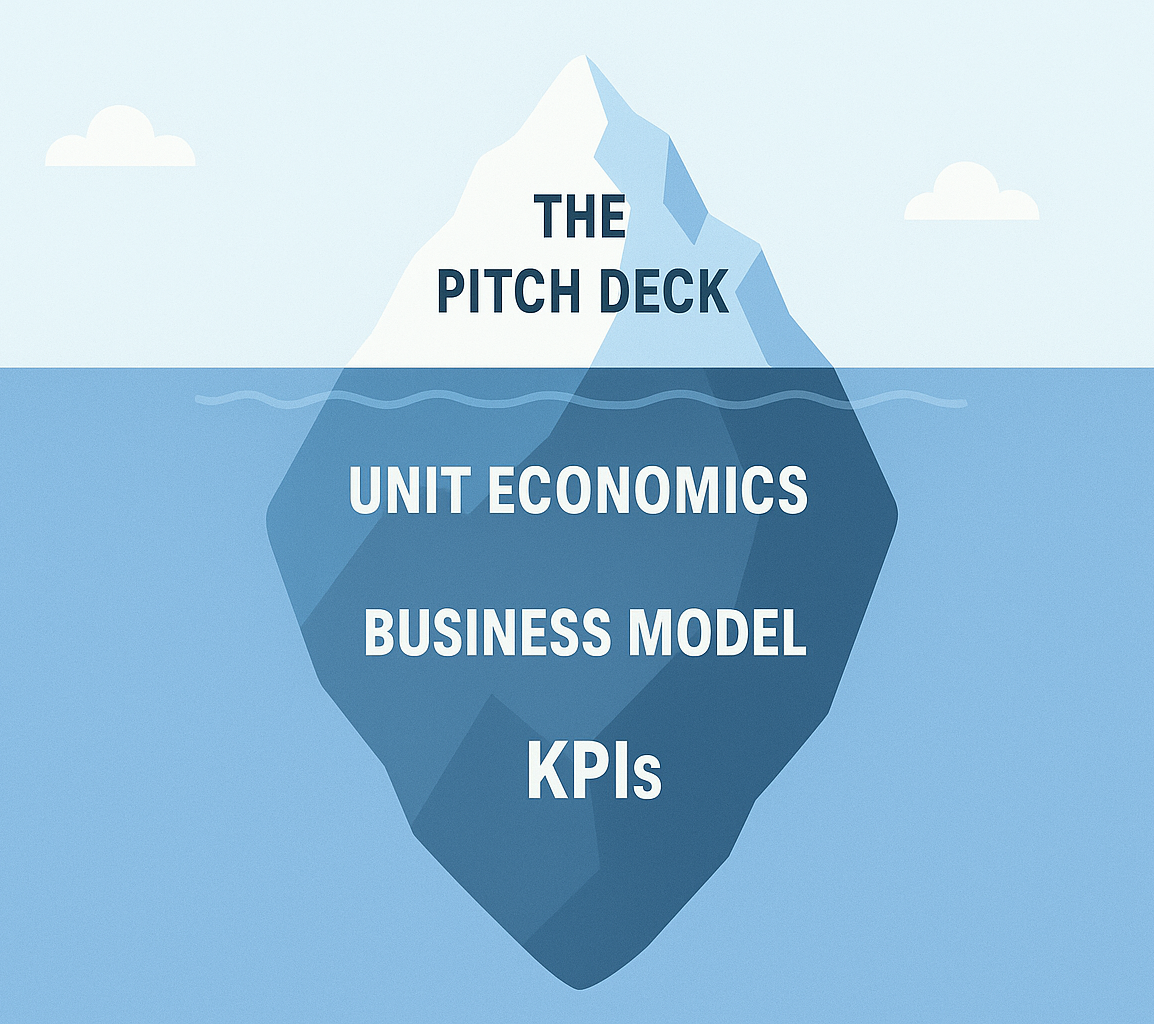
Most pitch decks fail not because of their design, but because they avoid the hard questions. Founders obsess over fonts, colors, and one-liners, but overlook the logic that underwrites an actual investment decision.
This week, I’m walking you through the three questions every founder should answer, before they ever hit “present”. Whether you're raising a pre-seed round or preparing for Series A, these principles will sharpen your pitch, clarify your model, and give investors what they’re really looking for: conviction.
Question 1: Is Capital a Multiplier or a Crutch?
Money doesn’t solve broken business models. Capital is a multiplier only when you’ve already proven something works. Ask yourself:
Are we funding existing traction or trying to find traction?
What have we already validated with customers?
Will this money unlock scale—not just survival?
A Strong Answer Sounds Like This:
“We’ve proven that for every $1 we put into our Google Ads funnel, we get a customer with a lifetime value (LTV) of $10. Our growth is currently capped by our budget. This capital will allow us to scale that proven channel from $5k/month to $50k/month, unlocking predictable revenue growth.”
Pro tip: Add a slide in your deck labeled “Why Capital Now?” that outlines exactly what funding unlocks, backed by real data (KPIs, pilot growth rates, CAC/LTV shifts).
Question 2: Do You Speak the KPIs That Actually Matter?
Founders love to talk about vision, passion, and product features. Investors listen for something else entirely. They have a love language, and it's spoken in metrics. If you’re not fluent, you’re not getting a second meeting.
CAC (Customer Acquisition Cost): What does it cost you to acquire one new paying customer? This is the fundamental cost of your growth engine.
CAC = Total Sales & Marketing Spend/Number of New Customers Acquired
LTV (Lifetime Value): How much gross profit will one customer generate for you over their entire relationship with your company?
LTV=(Average Revenue Per Customer)×(Gross Margin %)×(Customer Lifetime)
The golden rule of a healthy SaaS or D2C business is an LTV:CAC ratio of 3:1 or higher. This tells an investor that for every $1 you spend on acquiring a customer, you get at least $3 back.
Churn Rate: What percentage of your customers are you losing each month or year? High churn is a hole in your bucket. No matter how much water (new customers) you pour in, you’ll never fill it.
Monthly Churn Rate=(Customers at Start of MonthCustomers Lost in Month)×100
Burn Rate: How quickly are you spending your cash reserves? Investors need to know how much runway their investment is actually buying.
Gross Burn: Your total monthly operating expenses.
Net Burn: Your Gross Burn minus your monthly revenue. This is the real number that shows how much cash you're losing each month.
Action step: Build a table with your current vs. projected metrics over the next 18 months. Investors need to see a story of efficiency and scale—not just ambition.
Question 3: Is Your Exit Strategy Believable?
This is where most founders lose the room. "We’ll be acquired by Google" is not a strategy, it’s a dream.
Craft your exit narrative using:
Market comparables (Who acquired who, for how much, and why?)
Path to acquisition triggers (Revenue thresholds, user base, patents, distribution)
Investor ROI logic (How does your cap table + growth yield a real return?)
Put It Into Practice: Use the Investor FAQ
Don’t wait until you're asked to figure this out. Inside my Investor Playbook, I include a section called “Investor FAQ”, a living doc where you keep sharp, compelling answers to every real question you’ll face.
Want a free copy of the template?
Ultimately, investors don't fund pitches; they fund businesses. Prove yours is solid by nailing these three questions.
Best,
Clay Banks